Living in Gubbio: Where to Buy a Home? A Guide to the Best Neighborhoods
Why choose to settle in the 'City of Stone', one of Europe's medieval gems.
-
 author: Internal Editorial Team
Nestled on the slopes of Mount Ingino in the province of Perugia, Gubbio is one of Europe's best-preserved medieval towns, as well as an exceptionally appealing residential hub in north-eastern Umbria. Choosing to settle in the "City of Stone" means balancing a human-scale pace of life with an unspoiled natural landscape—all supported by strategic road links to Perugia, the Upper Tiber Valley, and the Marche region.
Choosing where to buy a home in Gubbio depends on your desired lifestyle: from the historical and architectural charm within the city walls to the logistical convenience of modern lowland districts, all the way to the privacy of the surrounding hillside hamlets.
Where to Buy a Home in Gubbio
-
Historic Center (The Four Quarters): Ideal for those seeking period stone properties, independent townhouses (cielo-terra), and hospitality investment value.
-
Madonna dei Perugini and San Marco: Perfect for families and professionals requiring walkable amenities, schools, green spaces, and easy parking.
-
Padule and Branca: Preferred for their proximity to the Branca Hospital, direct access to the SS 219/Pian d'Assino highway, and spacious properties with private gardens.
-
The Hillside Belt (Semonte, Mocaiana, San Martino in Colle): Ideal for stone farmhouses, rustic estates, and residences offering panoramic valley views.
1. The Historic Center: The Identity of the Four Medieval Quarters
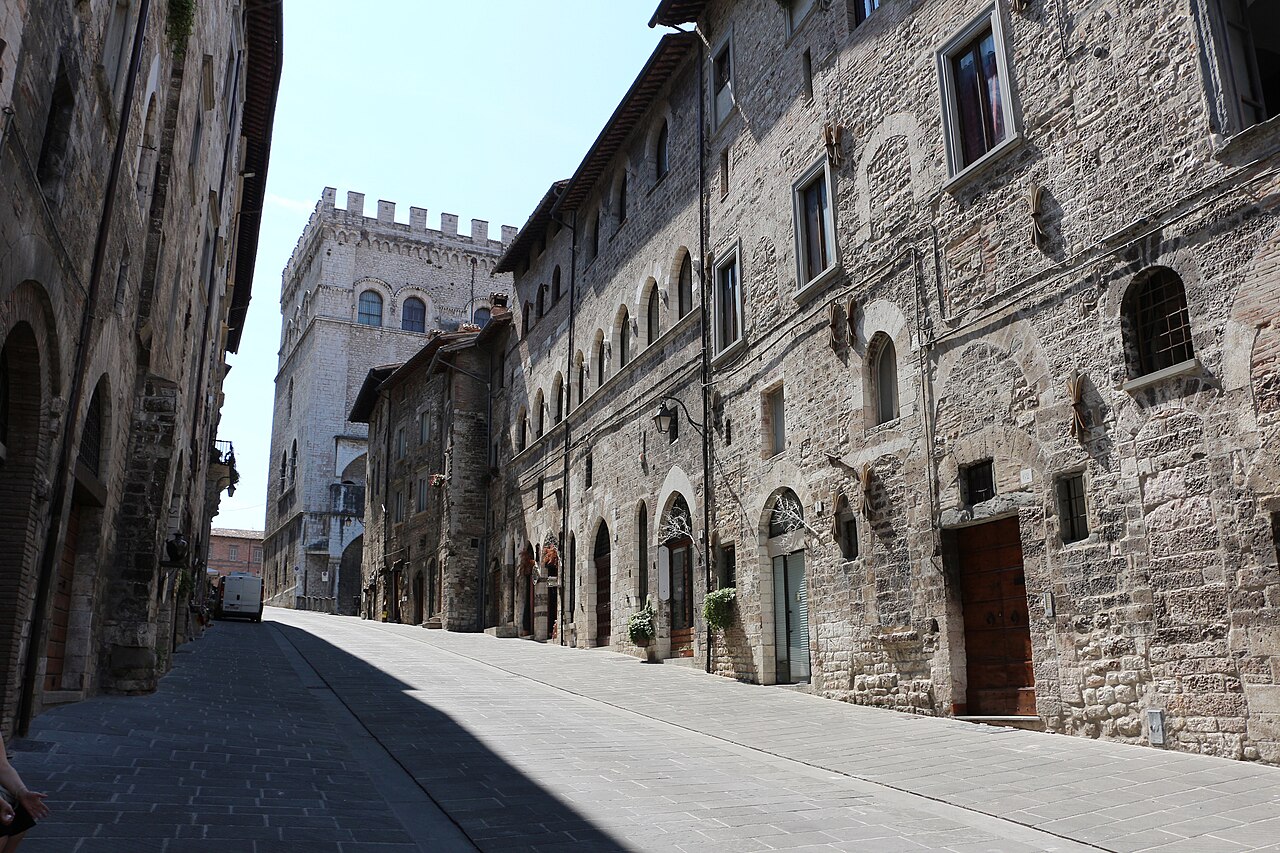
Gubbio's historic core is traditionally divided into four quarters, each defined by a distinct community, monumental, and urban identity. But what does living within the historic walls actually entail? Above all, it means soaking in the atmosphere of noble palazzos, repurposed medieval towers, or classic limestone townhouses, often complete with internal courtyards or exposed wooden beams.
-
San Martino Quarter: Set along the banks of the Camignano stream, it stands out for its historic bridges, picturesque alleys, and scenic vistas. It is one of the most sought-after areas for buyers looking for pronounced architectural character.
-
San Giuliano Quarter: Encompassing Piazza San Giovanni and the Logge dei Tiratori della Lana, it offers straightforward access to the outskirts, blending a historic setting with functional connections toward Viale Umberto Parruccini and the Roman Theatre Park.
-
Sant'Andrea Quarter: Perched on the upper slopes and dominated by the Church of San Marziale, it offers tranquility, commanding panoramic views over the plain, and settings of great historical prestige.
-
San Pietro Quarter: Located in the southern district near the abbey of the same name, it features slightly wider streets and closer proximity to vehicular entry points.
Within the historic center, vehicular traffic is regulated by a Limited Traffic Zone (ZTL). Given the hilly terrain, priority is often placed on functional amenities such as ground-floor cellars, taverns, or proximity to access gates with resident parking.
2. The Early Suburbs: Madonna dei Perugini, Via Leonardo da Vinci, and San Marco
Directly downhill from the medieval walls lie the modern residential districts that developed from the second half of the 20th century onward. This flat expanse is the most popular choice among local families.
-
Madonna dei Perugini and Via Perugina: A vibrant, modern area featuring recent residential complexes, public parks, shops, professional offices, and proximity to secondary schools. It guarantees apartment buildings equipped with elevators, underground garages, and habitable terraces.
-
San Marco Quarter: A connecting district to the southeast of the main urban area. It offers an orderly urban layout with detached villas, low-rise apartment buildings, and immediate access both on foot to the town center and by car to main road exits.
3. The Eastern Corridor and Infrastructure: Padule and Branca
Along the route of the SS 219 Pian d’Assino state road sit residential hubs that pair logistical convenience with suburban tranquility.
-
Padule: Among the most populous residential centers in the surrounding area. Characterized by single-family homes, terraced houses, and four-family complexes with private yards and parking spaces, it is ideal for those who prioritize independence and generous square footage.
-
Branca: A key regional landmark thanks to the modern unified hospital of Gubbio and Gualdo Tadino. It represents a strategic choice both for healthcare professionals and for commuters frequently using the SS 318 expressway (the Ancona–Perugia corridor).
4. The Hillside Belt: Semonte, Mocaiana, and San Martino in Colle
Gubbio also offers compelling options for buyers interested in rustic farmhouses, country estates, or semi-detached properties surrounded by olive groves. This foothills and hillside belt provides settings of remarkable natural beauty:
-
Semonte and Mocaiana (North-West Axis): Located along the route toward Umbertide, these well-structured hamlets provide essential services and residential settings immersed in the countryside.
-
San Martino in Colle, Monteluiano, and Ferratelle: Set across panoramic ridges overlooking the Eugubian basin, these areas feature stone country houses restored to modern seismic and energy efficiency standards, providing privacy without complete isolation.
Buying a Home in Gubbio: Which Area Should You Choose?
-
Historic Center (San Martino, San Giuliano, San Pietro, Sant'Andrea): Characterized by period townhouses, historic stone homes, and top-floor lofts. Best suited for lovers of historical architecture, young couples, and tourism/hospitality investors. Key strengths include aesthetic prestige, fully pedestrian surroundings, and an authentic neighborhood life.
-
Inner Suburbs (Madonna dei Perugini, San Marco): Known for low-rise apartments, penthouses with terraces, and semi-detached villas. Geared toward families with children, local professionals, and workers. Highlights include full access to services, garages, elevators, and proximity to school complexes.
-
Eastern Corridor (Padule, Branca): Defined by terraced townhouses, four-family homes with gardens, and detached houses. A residential area particularly suited to regional commuters, hospital staff, and families seeking larger floor plans. Features smooth logistics via the SS 219, private green spaces, and proximity to the hospital.
-
Hillside Belt (Semonte, Mocaiana, San Martino in Colle): Here you will find stone farmhouses, rustic estates, and agricultural properties with olive groves. An attractive option for investors seeking complete quiet, nature enthusiasts, or buyers looking for high-end second homes. This area provides open valley views, no noise pollution, and substantial private acreage.
Frequently Asked Questions about Gubbio
Which area is best for a family with children?
The first-ring suburban neighborhoods, such as Madonna dei Perugini and San Marco, offer the highest concentration of schools, nurseries, public parks, sports facilities, and supermarkets, all reachable on foot or within a few minutes by car.
Is it worth buying in the Historic Center as an investment?
The city's cultural heritage—tied to internationally renowned events such as the Festa dei Ceri, the World's Largest Christmas Tree, and medieval reenactments—fuels consistent demand for short-term rentals and boutique guest accommodations in historic quarters like San Martino and San Giuliano.
How are the road connections to major regional hubs?
Gubbio connects to Perugia via the SS 298 bypass, and links to the high-speed road network (the SS 318 di Valfabbrica toward Perugia and Ancona) via the SS 219 Pian d'Assino. This ensures straightforward travel to the Umbria International Airport (San Francesco d'Assisi) and the neighbouring Marche region.
Explore the real estate listings published on Gobidreal.it for well-priced houses and apartments in Gubbio and throughout Umbria!
Correlated Articles

Collection of offers: a practical guide
-
author: Internal Editorial Team

Industrial Real Estate Special: A Practical Guide to Warehouses (Selection, Checks, Costs)
-
author: Internal Editorial Team
Special Historic Hospitality Property: Investing in a Feudal Castle
-
author: Internal Editorial Team
Internal Editorial Team
Find our news

Get the most out of your assets.
Discover how to transform your
real estate into financial resources.
Collection of offers: a practical guide